
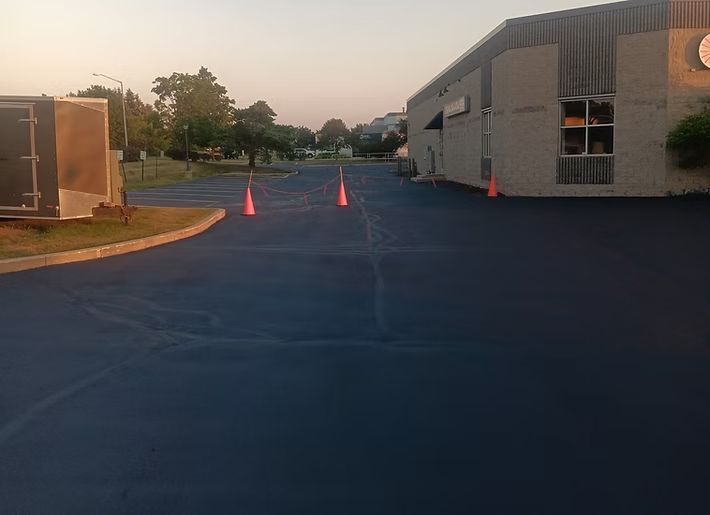
Surfaces Protected from Wisconsin Weather
Sealcoating in Burlington for asphalt driveways and parking lots facing oxidation, sun exposure, and seasonal temperature extremes
Asphalt oxidizes when exposed to sunlight and weather, losing the flexible binders that hold aggregate together and developing the gray, brittle surface that cracks easily under stress. Sealcoating applies a protective layer that shields the pavement from UV rays, rain, snow, oil drips, and temperature swings, while restoring the darker appearance that characterizes newly paved surfaces. Badger Sealcoat provides sealcoating in Burlington, East Troy, Mukwonago, and surrounding areas after evaluating your pavement to determine if the surface is structurally sound enough for coating—existing cracks should be sealed and damaged areas patched before application, since sealcoat protects intact asphalt but doesn't repair underlying defects.
Southeastern Wisconsin's seasonal changes stress asphalt through freeze-thaw cycles, summer heat that softens the surface, and the moisture exposure that accelerates deterioration when pavement lacks protection. Sealcoating acts as a barrier against these elements, slowing oxidation and reducing the rate at which everyday wear degrades the pavement structure.
Request a sealcoating quote after your pavement has been assessed to confirm it's ready for coating or to identify repairs that should be completed first.
What Changes After Sealcoating Is Applied
Sealcoating creates a uniform dark surface that makes oil stains, tire marks, and dirt more visible for easier cleaning, while filling small surface voids that would otherwise collect water and debris. The coating cures to form a protective layer that resists penetration by water, petroleum products, and the salts used for winter ice control, slowing the chemical and physical processes that age asphalt.
After application, your driveway or parking lot presents a cleaner, more maintained appearance that signals active property care. Water beads and runs off the surface rather than soaking into the pavement, and the darker color absorbs more heat, which helps snow and ice melt slightly faster during winter thaw periods. The coating doesn't eliminate the need for future maintenance but extends the interval before crack sealing or patching becomes necessary.
Proper application matters—coating should be applied when temperatures allow adequate curing time before vehicle traffic resumes or precipitation occurs, and the pavement must be clean and dry for the material to bond effectively. Rushed or improperly timed sealcoating can peel or wear prematurely, providing little protection despite the appearance of a fresh surface.
What Property Owners Usually Ask
Sealcoating decisions depend on pavement age, current condition, and the type of protection your asphalt needs against Burlington's weather patterns.
What does sealcoating actually protect against?
Sealcoating shields asphalt from UV oxidation that causes brittleness, water penetration that weakens the base, oil and chemical spills that dissolve binder, and surface abrasion from traffic and weather, slowing deterioration and preserving pavement flexibility.
When should asphalt be sealcoated in southeastern Wisconsin?
Sealcoating requires warm, dry conditions for proper curing—spring through early fall provides suitable temperatures, with timing adjusted to avoid rain forecasts for at least twenty-four hours after application.
How does sealcoating differ from repaving?
Sealcoating protects and preserves existing pavement that remains structurally sound, while repaving replaces deteriorated asphalt that has failed beyond the point where protective treatments provide meaningful benefit.
Why must cracks be sealed before coating?
Sealcoat is too thin to fill cracks effectively—water will still penetrate through unsealed cracks beneath the coating, continuing to damage the base despite the protected surface above.
What's the difference between spray and brush sealcoating?
Brush application works material into the pavement texture more thoroughly and provides better coverage on older or rougher surfaces, while spray application covers large smooth areas quickly with a thinner, more uniform coat.
Badger Sealcoat evaluates driveways and parking lots to determine whether sealcoating will provide effective protection or if repairs should be completed first to address structural issues. Call (262) 492-0990 to request a sealcoating assessment and receive recommendations based on your pavement's current condition and exposure to Wisconsin weather.