
Stopping Water Before It Widens Cracks
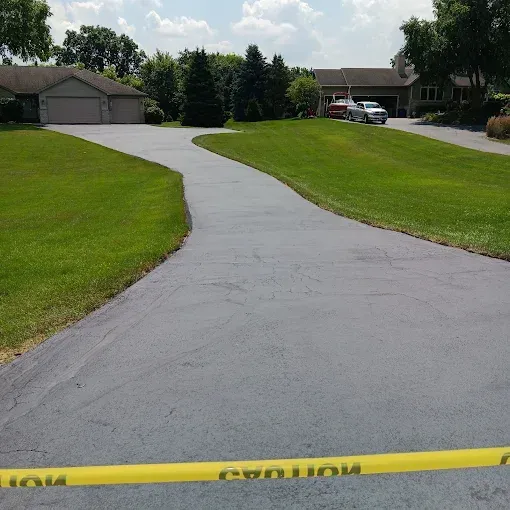
Crack Sealing in Burlington for asphalt showing early stress fractures and surface openings
Cracks in asphalt pavement create direct channels for water to reach the base material beneath the surface, where moisture weakens support and allows further pavement movement during freeze-thaw cycles common across Wisconsin winters. Badger Sealcoat addresses these openings by filling appropriate cracks with hot-applied rubberized sealant that remains flexible through temperature changes, blocking water entry while accommodating the slight expansion and contraction asphalt experiences seasonally. You prevent small stress cracks from becoming structural failures that require patching or overlay work.
Crack sealing works by routing or cleaning the crack to remove loose debris and incompatible material, then placing heated sealant into the opening so it bonds to the crack walls and forms a weatherproof plug. Traffic pressure and thermal movement stress untreated cracks continuously, and each moisture infiltration episode during rain or snowmelt erodes base material and expands the damaged zone outward from the original fracture.
Schedule an asphalt inspection to identify which cracks warrant sealing and what additional maintenance prepares your pavement for long-term performance.
Why Sealed Cracks Support Pavement Longevity
Sealed cracks stop the progression from hairline surface fractures to wide structural failures by eliminating the moisture pathway that undermines pavement integrity. The rubberized sealant flexes with pavement movement instead of cracking apart, maintaining a sealed barrier across seasons while the asphalt surface expands in summer heat and contracts during winter cold.
You notice that sealed cracks no longer collect standing water after rain events and that surrounding pavement remains stable rather than developing secondary fractures radiating from the original opening. Surfaces prepared with crack sealing accept sealcoating more effectively because sealer does not disappear into gaps or leave thin coverage over compromised areas, producing uniform protection across the entire pavement.
Both residential driveways and commercial parking lots benefit from early crack sealing, though the service addresses different crack patterns depending on pavement age, base condition, and traffic loading. Timing matters—cracks sealed before significant base erosion occurs preserve structural capacity, while delayed treatment often requires removing and replacing damaged sections instead of simple maintenance.
Common Questions About Asphalt Crack Repair
Customers often want clarity about which cracks need attention and how sealing fits into broader pavement maintenance plans before committing to the service.
What size cracks should be sealed?
Cracks wider than one-eighth inch typically warrant sealing to prevent water infiltration, while hairline surface crazing may not require individual treatment if sealcoating is planned. Cracks approaching half an inch or wider may need evaluation for deeper structural issues before sealant application.
How does Wisconsin freeze-thaw affect untreated cracks?
Water entering cracks freezes during winter, expanding with significant force that widens the opening and fractures adjacent pavement. Repeated freeze-thaw cycles each winter accelerate crack growth and base deterioration, turning minor surface cracks into structural problems within a few seasons.
When should cracks be sealed relative to sealcoating?
Crack sealing happens before sealcoating so the rubberized filler cures and the surface preparation process removes any sealant residue from surrounding pavement. This sequence ensures the sealcoat adheres properly and provides even coverage across both sealed cracks and intact asphalt.
What does hot-applied sealant mean for durability?
Hot-applied crack sealants are heated to around 400 degrees before placement, allowing the material to flow into the crack and bond to pavement surfaces as it cools. This method produces stronger adhesion and better flexibility compared to cold-pour products that simply rest in the opening.
Do sealed cracks remain visible after treatment?
Sealed cracks show as dark lines across the pavement surface where sealant filled the opening, particularly if the crack required routing to clean edges. The visual trade-off is accepting a visible repair line in exchange for preventing the crack from becoming a pothole or requiring full-depth patching.
Badger Sealcoat inspects your asphalt to identify cracks that threaten pavement integrity and explains how sealing coordinates with other maintenance steps to extend surface life. Arrange an estimate to review crack patterns and maintenance timing for your Burlington property.