
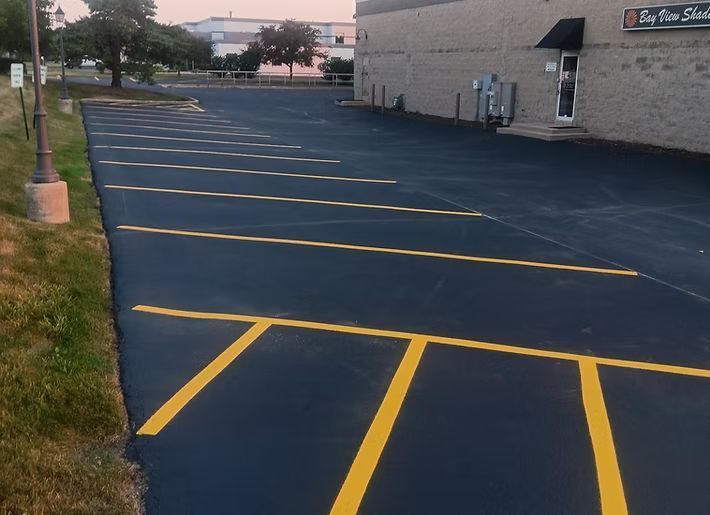
Parking Layout That Guides Traffic Clearly
Line Striping in Burlington for commercial parking areas requiring organized stall markings and directional guidance
Faded or absent pavement markings leave drivers guessing where parking stalls begin, which direction traffic should flow, and where pedestrian paths cross vehicle routes. Line striping creates a visible framework that organizes parking arrangements, defines circulation patterns, and communicates expectations to everyone using your commercial lot. Badger Sealcoat applies durable pavement paint in crisp, straight lines that establish stall boundaries, directional arrows, stop bars, and other markings that reduce confusion and support efficient space use across your paved area.
The striping process involves cleaning the pavement surface where markings will be placed, measuring and marking layout according to your parking plan, then applying traffic-grade paint using equipment that produces consistent line width and opacity. Properly marked lots accommodate more vehicles in less space because drivers park within defined boundaries instead of leaving irregular gaps, and clear directional markings reduce the conflicts that occur when traffic flow is ambiguous.
Request a parking lot striping estimate to review current marking condition and layout requirements for your property.
How Markings Improve Lot Function and Appearance
Fresh striping transforms unclear pavement into an organized parking system where stall lines indicate exactly where each vehicle belongs and arrows show which direction traffic moves through aisles. The visual structure guides drivers instinctively, reducing the hesitation and maneuvering that slow parking lot circulation during busy periods.
Customers and visitors notice the difference immediately—parking becomes straightforward rather than tentative, and the property appears actively maintained rather than neglected. Consistent line visibility also supports accessibility compliance by clearly marking designated stalls and access aisles that meet dimensional requirements.
Wisconsin weather and traffic wear fade pavement markings over time as vehicle tires abrade paint and winter plowing scrapes surfaces, making periodic restriping necessary to maintain clear visibility. The frequency depends on traffic volume, snow removal methods, and pavement condition, with high-use commercial lots often requiring attention every one to two years to keep markings legible.
What Property Managers Want to Know
Commercial property managers in southeastern Wisconsin typically ask about striping durability, layout options, and maintenance timing before scheduling lot marking work.
What type of paint holds up best on asphalt?
Traffic-grade waterborne acrylic paint provides the balance of durability, visibility, and regulatory compliance that most commercial striping requires. This paint resists fading from sun exposure and holds color through wet conditions while meeting VOC standards.
How long does fresh striping take to dry for traffic?
Waterborne striping paint typically dries to touch within 15 to 30 minutes under warm, dry conditions, allowing careful vehicle traffic shortly after application. Full cure takes longer, but lots can return to normal use the same day if weather cooperates and application happens during low-traffic periods.
Can existing markings be changed during restriping?
Layout changes are possible if your parking needs have shifted, though removing old markings that conflict with the new layout may require grinding or additional surface preparation. Many restriping projects simply refresh existing layouts when the current arrangement still meets operational needs.
What markings are typically included in parking lot striping?
Standard striping includes parking stall lines, aisle directional arrows, stop bars at intersections, and accessible parking symbols with appropriate signage locations. Fire lanes, loading zones, and other specialized markings are added based on property requirements and local code.
How does Burlington weather affect striping longevity?
Winter snow removal, road salt application, and freeze-thaw cycling accelerate marking wear compared to milder climates. Plowing equipment that drags across pavement can scrape paint, and salt exposure causes some fading, making regular inspection and maintenance restriping necessary to keep markings visible.
Badger Sealcoat measures your parking area, discusses layout and marking priorities, and applies striping that clarifies traffic flow and parking organization for your commercial property. Contact our office at (262) 492-0990 to schedule a site visit and striping proposal.