
Restoring Failed Pavement Before It Spreads
Asphalt Patching in Burlington for driveways and parking lots with broken sections, sunken areas, or deterioration beyond surface treatments
Surface treatments like sealcoating protect intact asphalt but cannot restore pavement where the base has failed, water has eroded sub-grade material, or freeze-thaw cycles have created structural voids. Asphalt patching removes or addresses these damaged areas and restores the pavement with new material that provides a smooth, load-bearing surface. Badger Sealcoat evaluates whether your driveway or parking lot requires patching based on visible indicators—sunken sections where the base has settled, areas that flex noticeably under vehicle weight, or broken pavement with exposed aggregate and crumbling edges that cannot be sealed effectively.
Wisconsin freeze-thaw cycles accelerate localized failures when water infiltrates through cracks, freezes in the base layer, expands, and creates voids that collapse once the ice melts and traffic resumes. Patching stops this deterioration from spreading to adjacent pavement by removing the compromised section, addressing drainage or base issues if present, and installing new asphalt that bonds to the surrounding surface.
Request an assessment and estimate to determine which sections require patching and whether additional crack sealing or sealcoating will protect the remaining pavement.
What You Notice Once Patching Is Finished
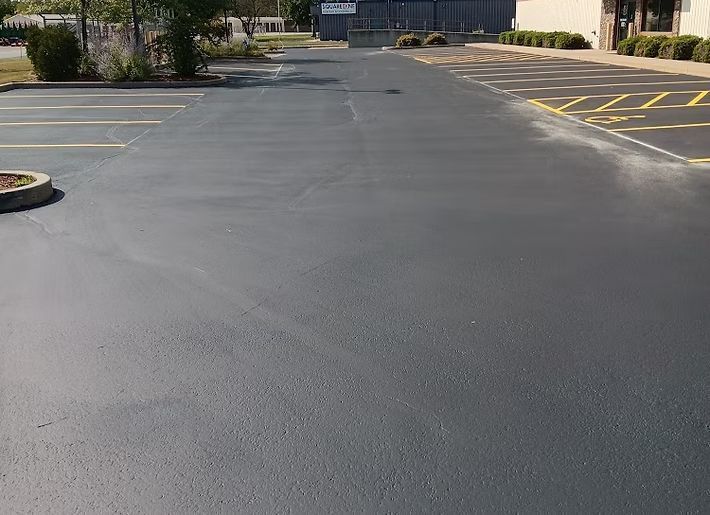
Asphalt patching creates a visible repair where new material replaces the failed section—the patch appears darker initially and will weather to match surrounding pavement over time as both surfaces oxidize. The repair eliminates the rough transition, depression, or broken edges that previously marked the damaged area, creating a smoother driving and walking surface that no longer collects water or shifts under vehicle weight.
The patched section stops deteriorating because the structural cause—whether base erosion, inadequate drainage, or freeze-thaw damage—has been addressed during the repair process. Water no longer pools in depressions where it can freeze and expand, and vehicles pass over the area without encountering the jarring impact or loose gravel that broken pavement produces.
Patching addresses localized failures but doesn't prevent deterioration in other areas—properties with multiple damaged sections may benefit from crack sealing across the remaining pavement to stop water intrusion before additional failures develop. The repair creates a functional surface that handles traffic safely while protecting your investment by halting damage progression.
Common Questions About This Service
Asphalt patching decisions depend on damage extent, traffic patterns, and the underlying cause of pavement failure in Burlington, Waukesha, Lake Geneva, and surrounding areas.
How do you know if patching is necessary?
When pavement shows structural failure—sunken areas, significant cracking with base movement, or sections that flex under weight—surface treatments alone won't restore integrity. Patching removes compromised material and rebuilds the pavement structure.
What causes localized pavement failures?
Water infiltration weakens the base layer through freeze-thaw cycles, poor drainage allows erosion beneath the surface, or heavy concentrated loads exceed what the pavement was designed to support, creating fatigue cracks that develop into structural failures.
Will patched areas match existing pavement?
New asphalt appears darker than weathered surfaces but oxidizes over several months of sun and weather exposure, gradually blending with surrounding pavement as both age.
When should patching be scheduled in southeastern Wisconsin?
Patches require warm temperatures for proper compaction and bonding—scheduling between late spring and early fall ensures material cures correctly before winter freeze-thaw cycles resume.
Can patches be sealcoated?
Newly patched areas should cure for several months before sealcoating to allow volatiles to escape and the surface to oxidize slightly, which improves sealcoat adhesion across both patch and original pavement.
Badger Sealcoat identifies which sections of your driveway or parking lot require structural repair through patching versus preventive treatments like crack sealing or sealcoating. Schedule an assessment to review pavement condition and receive an estimate based on the repairs needed to restore safer, functional surfaces.